

You can expect most dental implants to take about 3 to 6 months to fully heal and integrate with your jawbone, though the initial soreness and swelling usually improve within a week. That timeline gives you a clear window for when a permanent crown or bridge can be placed, and it helps you plan recovery, work, and travel.
This article will walk you through the week-by-week healing stages, the main factors that speed up or slow down recovery, and practical steps you can take to protect the implant and support bone healing. Follow the guidance here and you’ll know what to watch for, how long each phase typically lasts, and which habits make a meaningful difference in outcomes.
Typical Healing Timeline for Dental Implants
You will move through predictable phases: initial wound healing, bone integration (osseointegration), and soft-tissue maturation. Expect different symptoms and care needs at each phase, and clear checkpoints your dentist will use to confirm progress.
Stages of Dental Implant Healing
The first 1–2 weeks after implant placement focus on soft-tissue healing. You can expect some swelling, mild bleeding, and soreness that typically peaks within 24–72 hours and improves with cold compresses, prescribed medications, and a temporary soft-food diet. If sutures are placed, they usually dissolve on their own or are removed within 7–14 days.
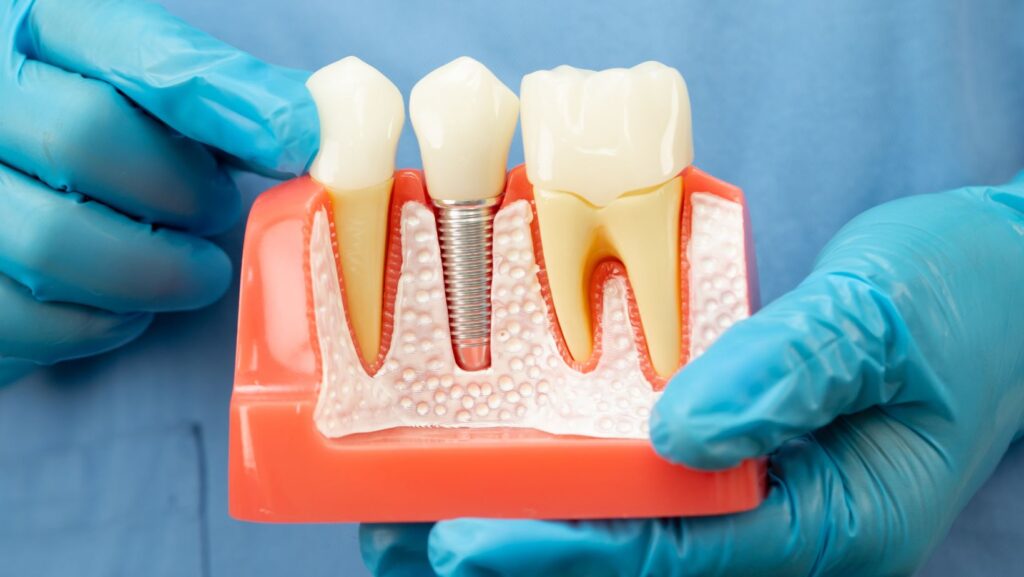
Between 6–12 weeks, early osseointegration begins as the bone gradually fuses to the implant. Discomfort is usually minimal during this stage, but you should avoid heavy chewing near the surgical site. Bone remodeling continues, and stability improves steadily. Full osseointegration and tissue maturation generally occur within 3–9 months. If you required a bone graft or sinus lift, healing may take longer. Your permanent crown or restoration is placed only after your clinician confirms that integration is stable and secure.
If you are considering a single tooth implant in Miami, understanding this healing timeline can help you plan confidently and set realistic expectations for recovery and final results.
Expected Recovery Times by Procedure Step
Implant placement surgery: expect 1–3 days of significant discomfort and 1–2 weeks for initial soft-tissue closure. You can usually return to nonstrenuous work within 1–3 days.
If a bone graft was performed: allow 3–6 months for graft consolidation before placing the implant or before loading an implant placed simultaneously. Grafts add time because new bone must form and mature.
Immediate placement with immediate temporary restoration: healing varies; the implant must still reach sufficient primary stability. If your implant experiences micromovement, your clinician will delay final loading. Final crown placement usually happens at 3–6 months for straightforward cases, and 6–9 months when extra grafting or sinus augmentation is involved.
How Healing Progress is Monitored
Your dentist monitors healing with scheduled clinical checks and imaging. Typical follow-up visits occur at 1 week, 4–6 weeks, 3 months, and the time of crown placement. X-rays assess bone contact and detect gaps or bone loss.
Clinicians also check soft-tissue health, probing depths, and implant mobility. You will be asked about pain, swelling, and function. Any persistent pain, increasing swelling, or mobility triggers further evaluation, possible antibiotics, or revision to protect long-term success.
Factors That Influence Dental Implant Recovery
Several personal and procedural factors determine how quickly you recover and how predictable osseointegration will be. Expect variables such as your general health, local bone conditions, implant type, and how carefully you follow aftercare instructions to change the timeline.
Patient Health and Medical History
Your chronic conditions directly affect healing speed and infection risk. Diabetes with poor control, autoimmune disorders, or medications that suppress immunity (like high-dose steroids or chemotherapy) slow tissue repair and increase complications.
Smoking reduces blood flow and delays bone integration; quitting at least several weeks before and after surgery improves outcomes. Age influences healing capacity, but healthy older adults can still achieve successful integration if comorbidities are managed.
Tell your surgeon about osteoporosis treatments (bisphosphonates, denosumab) and anticoagulants; these can alter surgical planning or timing. Preoperative optimization—better glycemic control, medication review, and smoking cessation—shortens recovery and lowers failure risk.
Oral Hygiene and Aftercare
Your daily care habits materially shape the local environment for healing. Keep the surgical site clean with gentle rinses (saline or chlorhexidine if prescribed) and avoid brushing the wound directly for the first few days as instructed.
Follow prescribed antibiotics and analgesics to prevent infection and control inflammation. Avoid hard, crunchy, or sticky foods until your clinician clears you; chewing forces too early can disturb the implant or sutures.
Attend follow-up visits for suture removal and progress checks. Report symptoms like increasing pain, swelling after 72 hours, persistent bleeding, or fever immediately—early intervention prevents complications that lengthen recovery.
Type of Implant and Surgical Technique
Different implant systems and placement techniques change the trauma level and healing demands. Immediate implant placement into an extraction socket can shorten overall treatment time but may raise early risks if infection or insufficient bone exists.
Two-stage surgeries (implant placed, covered by gum, then uncovered later) shield the implant during initial bone healing and are often chosen when bone grafting is required. Guided surgery and flapless techniques reduce soft-tissue trauma and typically speed soft-tissue recovery.
The size, surface treatment, and primary stability of the implant matter. Roughened or treated surfaces often promote faster osseointegration. High initial torque and good primary stability usually predict a smoother, quicker integration period.
Bone Quality and Quantity
Your jawbone’s density and volume set the baseline for how well an implant integrates. Dense cortical bone offers strong primary stability and often faster osseointegration, while porous or atrophic bone prolongs the process and raises risk of micromovement.
If you need bone grafting or sinus lift procedures, expect an extended timeline—grafted sites can require months to mature before final implant loading. Bone graft type (autograft, allograft, xenograft, or synthetic) and fixation influence how quickly new bone becomes supportive.
Imaging (CBCT or panoramic X-ray) helps your clinician assess bone and plan augmentation when necessary. Maintaining adequate bone support through timely treatment and avoiding behaviors that cause bone loss (like smoking or untreated periodontal disease) improves long-term implant stability.
Tips to Support Healing After Dental Implant Surgery
Follow specific steps for wound care, pain control, diet, and activity to reduce complications and support osseointegration. Watch for signs of infection, persistent pain, or implant mobility and contact your provider promptly if they appear.
Best Practices for Post-Operative Care
Keep the surgical site clean without disturbing the blood clot. Rinse gently with a prescribed chlorhexidine or warm saline solution starting 24 hours after surgery; avoid vigorous swishing for the first week.
Control pain and swelling with the medications your clinician prescribes or recommends. Take NSAIDs (ibuprofen) or acetaminophen on schedule for the first 48–72 hours and apply an ice pack 10 minutes on/10 minutes off for the first 24 hours.
Modify your diet to protect the implant. Eat soft, non-chewy foods (yogurt, mashed potatoes, smoothies with a straw removed, scrambled eggs) for 7–14 days and avoid hard, crunchy, or sticky foods on the surgery side until your clinician clears you.
Avoid smoking, vaping, and alcohol during healing. Nicotine reduces blood flow and delays osseointegration; stop at least two weeks before and after surgery if possible. Sleep with your head elevated for 2–3 nights to reduce swelling.
Attend all follow-up visits and follow any suture-care instructions. If your provider used protective healing caps or temporary restorations, do not attempt to remove them.
Warning Signs During Recovery
Expect mild bleeding, swelling, and bruising for 2–7 days; these are normal when diminishing. Seek attention if bleeding is heavy (soaking >2 pads in an hour) or restarts after initially stopping.
Watch for increasing pain that does not respond to prescribed analgesics, spreading redness, or fever above 100.4°F (38°C). These suggest infection and require prompt evaluation and likely antibiotics.
Notice any looseness, shifting, or a metallic taste near the implant. Mobility or persistent numbness beyond a few days can indicate nerve irritation, failed osseointegration, or implant failure.
Observe gum appearance around the implant. Excessive pus, persistent swelling after 7–10 days, or a foul odor are red flags. Make a note of any difficulty breathing or swallowing and seek emergency care if those occur.
When to Contact Your Dental Professional
Call immediately if you experience heavy bleeding that won’t stop after applying gentle pressure for 20 minutes. Your clinician may need to examine the site, place additional sutures, or provide hemostatic treatment.
Contact your provider the same day for signs of infection: fever, increasing pain despite medication, spreading redness, or visible pus. Early antibiotic treatment and drainage, if required, reduce risk to the implant.
Report any implant mobility, persistent numbness, new or worsening swelling after one week, or a broken temporary restoration. These issues often need clinical intervention such as repair, radiographs, or surgical revision.
Use the emergency contact number from your clinic after hours for sudden severe pain, difficulty breathing, or uncontrolled bleeding. For routine concerns—mild swelling, medication questions, or follow-up scheduling—use the office phone or patient portal.