

Table of Contents
ToggleIf you put off a bone graft for too long, your jawbone can shrink. This makes it tough—or even impossible—to get straightforward dental implants later.
Timing matters. The longer you wait, the more likely you’ll deal with bone loss, infection, or the need for extra procedures down the road.
Delay long enough and you might need bigger grafts, more surgeries, or even a completely different restoration plan. Your jawbone could deteriorate so much that a standard implant just isn’t an option anymore.
Let’s talk about why timing is so important, what happens if you wait too long, and how your treatment options get more complicated the longer you delay—and if you’re also exploring smile enhancement options like dental veneers in Anchorage, acting sooner rather than later keeps more doors open for your overall treatment plan.
Critical Role of Timely Bone Grafting
Acting quickly with bone grafting helps preserve your jaw’s shape and volume. That’s what gives you the best shot at predictable, simple implant placement.
If you don’t wait too long, you’re less likely to run into complications or higher costs later.
Foundation for Dental Implants
You need enough bone height and width to keep an implant stable. After a tooth is lost, the bone starts to resorb—shrink away—if you don’t graft soon.
As bone shrinks, your options for implant placement get limited. You might need bigger grafts, more complicated surgeries, or even have to settle for angled or shorter implants that aren’t as strong in the long run.
Getting a graft early keeps the bone contours you need. That way, your dentist can usually place a regular-sized implant in the ideal position, which helps with biting forces and looks more natural.
Wait too long, and you’re looking at bone blocks, sinus lifts, or multi-stage surgeries. Not exactly what anyone wants.
Bone Regeneration and Preservation
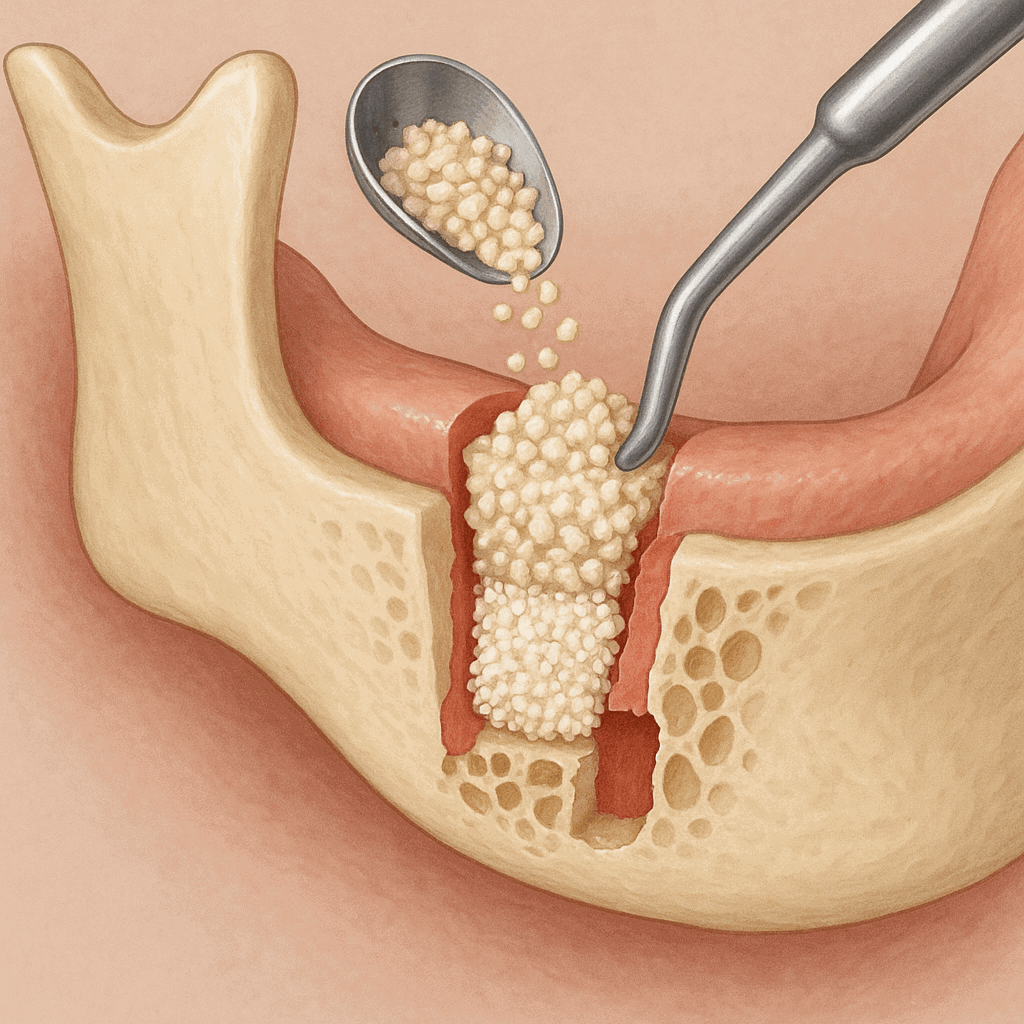
A bone graft acts as a scaffold for your body to grow new bone. Over a few months, your body replaces the graft with its own bone.
The process starts with new blood vessels growing in, then soft bone forms, and finally it hardens. If you wait too long, the area can fill with scar tissue instead, and you lose predictability.
Doing the graft at the right time gives your cells the best shot at healing. Wait, and you’ll probably need more graft material or even have to take bone from somewhere else in your body.
Healing can take anywhere from two to eight months, depending on the type of graft. Keep that in mind when planning your treatment—timing matters for both the graft and the implant.
Integration with Adjacent Tissues
You need good bone and healthy gums for a graft to succeed. The gums protect the graft and help keep everything clean.
If you delay, the gums can collapse or recede, making it harder to close wounds and raising the risk of infection. Sometimes you’ll need to graft both bone and gum tissue, or do it in stages.
Getting the timing right makes wound closure easier and lowers the risk of graft exposure. It also helps keep your crowns looking good and your gums healthy.
Think about gum health and bone graft timing together if you care about how everything will look and function in the long run.
Consequences of Prolonged Delay
Put off implant placement after a bone graft, and the area can change a lot. You might lose bone volume, see changes in nearby teeth, or even notice your facial support fading.
These changes mean you’ll probably need extra procedures, and getting an implant later could get tricky—or even impossible.
Accelerated Bone Loss
Without an implant, the grafted spot doesn’t get the mechanical load it needs. Bone needs pressure to stay strong; without it, both the graft and your own bone can shrink faster than you’d expect.
You can lose millimeters of bone in just a few months. That means you might need another graft, a bigger graft, or a different implant location—all of which cost more and take more time.
If you already had a lot of bone loss, waiting makes it even tougher to use standard implants. You might end up needing block grafts, bone distraction, or special implants that come with their own downsides.
Impact on Oral Health
Delay can let nearby teeth drift into the empty space. That messes up your bite and can create spots where food gets stuck, raising your risk for cavities and gum disease.
The gum over shrinking bone gets thinner, making it harder to fit crowns and keep things looking natural. If the graft gets infected while you’re waiting, you could lose it entirely.
That means starting over with another graft, more antibiotics, and a longer wait before you can chew normally again.
Altered Facial Structure
Losing bone changes how your lips and cheeks look. Even small drops in bone height can make your face look flatter and speed up signs of aging.
If you’re missing front teeth, you might notice more wrinkles or a collapsed smile as time goes on. Fixing this later is possible, but it often takes bigger grafts or extra gum procedures to get things looking right again.
Waiting can make the reconstruction more invasive and complicated if you want to restore both function and appearance.
Treatment Complexity and Restoration Outcomes
The longer you wait, the more complex your surgery gets. Your options narrow, and you might face longer procedures, higher costs, and more stages of treatment.
Increased Need for Extensive Surgery
Wait too long, and your jawbone can shrink so much that you’ll need bigger, more involved grafts. Instead of a simple graft, you might need block grafts, sinus lifts, or multi-stage surgeries to rebuild the bone.
These procedures take more time, require longer recovery, and can come with more side effects. If your surgeon needs to take bone from another spot, you’ll deal with extra healing and higher risks.
Planning gets trickier, too. Your dentist might need CT scans, special guides, or to break up the process into several appointments, all of which add to the bill.
Reduced Candidate Suitability
As bone loss gets worse, you might not be a candidate for standard implants at all. If your jawbone isn’t thick or tall enough, you’ll need more reconstruction or have to consider alternative solutions.
Other health issues—like smoking, diabetes, or a history of radiation—can make things even riskier. Sometimes, implants just aren’t a safe option anymore.
In those cases, you might end up with short implants, zygomatic implants, or removable dentures. Each comes with its own pros, cons, and maintenance headaches, so you’ll need to talk it all through with your dentist.
Potential for Limited Treatment Options
Severe resorption can really shrink your restorative options. Sometimes, less-invasive solutions just aren’t on the table anymore.
Fixed implant-supported crowns might not work in these cases. You might have to look at bridges, overdentures, or maybe even more complicated implant setups.
Some paths need extra steps, like soft-tissue grafting to fix thin or receding gums. That means more procedures, longer healing, extra cost, and it can affect how things look and feel down the road.
If you’re not sure, ask your dentist to lay out the options side by side. Get the details—how long they’ll last, what maintenance looks like, how many surgeries you’ll face, and what it’ll cost you. That way, you can figure out which direction makes the most sense for you.